


HIS LATEST BOOK IS NOT BASED
ON DIVINE REVELATION. IT'S BASED
ON CHRISTIAN PROPHETIC FICTION
AND A LOT OF HYPE TALK.

BELOW ARE MORE DETAILS FROM AMAZON & UNDER WHAT GENRE CAHN'S BOOK HAS BEEN DESIGNATED
Best Sellers in Christian Literature & Fiction!


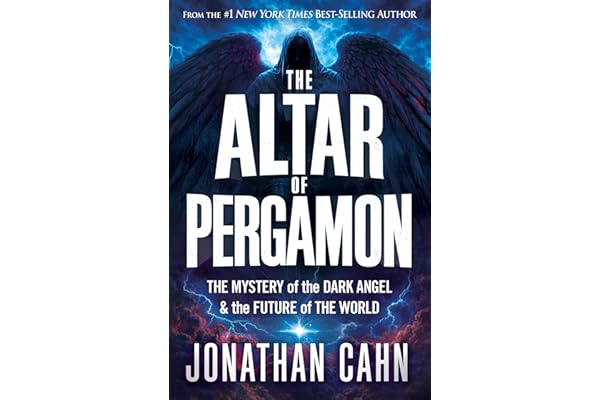
Product details
- ASIN : B0GX35XJDG
- Publisher : Frontline
- Accessibility : Learn more
- Publication date : September 1, 2026
- Language : English
- Print length : 352 pages
- ISBN-13 : 978-1636416168
- Best Sellers Rank: #7,886 in Kindle Store (See Top 100 in Kindle Store)
- Genre & Style: Cahn frequently uses a "narrative" or "story" format (such as in his bestseller The Harbinger) to present what he considers to be divine revelations or "ancient mysteries". Because these narratives involve supernatural themes, ancient entities, and prophetic interpretations of current events, they are sometimes categorized under speculative fiction or Christian fiction by retailers like the "LEFT BEHIND SERIES" by Tim LaHaye and Jerry B. Jenkins.

Author: Jonathan Cahn
Publisher: FrontLine / Charisma Media
Release Date: September 1, 2026
Categories: Fiction / Christian / General • Religion / Biblical Studies / Prophecy • Politics & State
- Platform Monetization: Channels often make money generally from overall video views, ads, and channel memberships rather than a coordinated pay-for-promotion scheme tied specifically to Cahn's books.
- Affiliate Commissions: A subset of You Tube creators may include standard retail affiliate links in their video descriptions, meaning they receive a tiny percentage if a viewer clicks and purchases Cahn's books, but this is a standard marketing practice across YouTube rather than exclusive to Cahn.
- Last but not least, if you post a comment on their channel which doesn't align with or debunks their fallacies, your comment will be deleted because it poses a threat to their financial interest.
- TRUST ME BECAUSE THEY HAVE DONE IT TO ME! DO NOT ALLOW YOURSELF TO BE BAMBOOZLED BY THESE MARKETING STRATEGIES. IN THEIR DELUSIONAL MINDS, ANY SO CALLED ANCIENT MYSTERY OR BOGUS PROPHECIES IS POSSIBLE IN CAHN'S MYSTICAL WORLD.
- Thematic Focus: Stories generally highlight characters undergoing moral conflicts, crises of faith, or personal transformation, while ultimately discovering strength through their beliefs.
- Clean Content: Readers seeking "clean" stories often turn to this genre because it avoids explicit or graphic material.
- Uplifting Resolutions: The narratives are designed to entertain while providing an optimistic, encouraging takeaway for the reader. [1, 2, 3, 4]
- Religious and Apocalyptic Fiction

- Kat Kerr: Widely identified by conservative theologians and discernment ministries as a false prophet, Kerr is known for controversial claims about regular visits to heaven and a track record of failed prophetic predictions, such as her unfulfilled assertions that Donald Trump would win the 2020 election in a landslide. [1, 2, 3]
- Jonathan Cahn: A bestselling author and speaker frequently promoted on Charisma Media, Cahn is often criticized by theologians for using extrabiblical revelation and eisegesis to link modern-day geopolitical and cultural events directly to ancient biblical prophecies. [1, 2, 3, 4]
- Discussions on Prophecy: While Strang and the individuals he platforms defend their teachings, online communities like Reddit's TrueChristian indicate mixed opinions and heated debates. Some users aggressively challenge the authenticity of these claims, whereas supporters defend the prophets' character. [1, 2, 3, 4]
FACT CHECKING
First let's examine the Biblical text and message that Jesus sent to the church at Pergamum from the book of Revelation
Revelation 2:12-17 continues with the third of seven messages to the churches of Asia Minor (modern-day Turkey) during the apostle John’s time. Each of these messages includes a specific word to a specific church, but there are also lessons applicable to the lives of believers today. This third letter is to the believers in Pergamum (or Pergamos), which was a beautiful and art-filled city in the province of Asia built along two tributaries of the Caicus River. Pergamum was a center for the worship of Dionysus, Zeus, and other pagan gods.
The message to the Pergamene church was from the Lord Jesus Christ, specifically addressed to the “angel” (or “messenger”) of the church: “And to the angel of the church in Pergamum write: ‘These are the words of him who has the sharp, double-edged sword’” (Revelation 2:12). This was not John’s message to the believers at Pergamum; it was a message from Jesus Christ. The depiction of Jesus holding a sharp, two-edged sword refers to the Lord’s readiness to bring judgment (cf. Revelation 1:16).
First, Jesus affirms the church’s positive actions: “I know where you live—where Satan has his throne. Yet you remain true to my name. You did not renounce your faith in me, even in the days of Antipas, my faithful witness, who was put to death in your city—where Satan lives” (Revelation 2:13). The Pergamene believers lived in a difficult place, surrounded by pagan influences, yet they held fast to Christ’s name and did not deny Him during difficult times.
One Christian in Pergamum named Antipas is mentioned as a “faithful witness.” Church tradition says that Antipas was a physician suspected of secretly propagating Christianity. The Aesculapians (members of the medical guild) accused Antipas of disloyalty to Caesar. Upon being condemned to death, Antipas was placed inside a copper bull, which was then heated over a fire until it was red-hot.
The church was not perfect, however, and Jesus took note of their sin: “Nevertheless, I have a few things against you: You have people there who hold to the teaching of Balaam, who taught Balak to entice the Israelites to sin by eating food sacrificed to idols and by committing sexual immorality. Likewise you also have those who hold to the teaching of the Nicolaitans” (Revelation 2:14-15). The “teaching of Balaam” is explained in the context, as Christians were eating food that had been sacrificed to idols (religious compromise) and committing sexual immorality (moral compromise). The original Balaam’s deceitful work is described in Numbers 25:1-3 and Numbers 31:15-16. The Nicolaitans are mentioned only in this letter and in the letter to the Ephesian church (Revelation 2:6). They were likely a group similar to those who held the teachings of Balaam, though the exact nature of their doctrine and practice is unknown.
Jesus then issues a clarion call to repent of their sin: “Repent therefore!” (Revelation 2:16). Our Lord hates religious and moral compromise. He calls His people to live differently.
Jesus notes the judgment that would take place if the church of Pergamum did not repent: “I will soon come to you and will fight against them with the sword of my mouth” (Revelation 2:16b). The Nicolaitans and those who were teaching Balaam’s error would be destroyed, along with their followers, from the congregation at Pergamum. Jesus desires purity among His people, and we have a responsibility to remove false teachers from the church.
Jesus makes a final promise to the believers in Pergamum: “To him who overcomes, I will give some of the hidden manna. I will also give him a white stone with a new name written on it, known only to him who receives it” (Revelation 2:17). The three blessings are hidden manna, a white stone, and a new name. The precise explanation of these three items is disputed; however, all three blessings must concern the believer’s victorious reign with Christ, consistent with the blessings bestowed on the other six churches of Revelation 2–3. The “hidden manna” is likely an allusion to the manna hidden in the Ark of the Covenant, representative of God’s faithful presence and sustenance. The “white stone” could be a reference to the stones used for entrance into temple events in ancient times or to one of the stones on the high priest’s breastplate (Exodus 28:21), although the exact meaning of the stone is uncertain.
DEAR VIEWER, FROM THE ABOVE BIBLICAL PASSAGE, DO YOU SEE ANY BIBLICAL PROPHESY OR SO CALLED ANCIENT MYSTERY WHICH JESUS ALLUDED TO REVEALING THAT THE ALTAR OF PERGAMON/SATAN'S THRONE WOULD HAVE A DIRECT CORRELATION TO THE RISE OF HITLER'S NAZI GERMANY, STALIN'S SOVIET UNION OR INFLUENCE ANY OTHER GLOBAL GEOPOLITICAL EVENTS THAT MR. CAHN IS CLAIMING IN HIS LATEST BOOK?
- The Book of Revelation: In Revelation 2:13, the writer addresses the early Christian community living in the ancient city of Pergamon (or Pergamum), stating, "I know where you live—where Satan has his throne." [1]
- Historical and Symbolic Meaning: Mainstream biblical scholars and historians interpret this phrase as symbolic language. It reflected the intense local pressure placed on Christians in the 1st century AD to participate in Roman imperial cult worship and pagan religious practices (such as the prominent temples dedicated to Zeus, Dionysus, and Asclepius) rather than a prediction of future European events. [1, 2]
- The Pergamon Altar: Many historians and archaeologists associate the biblical phrase "Satan's throne" with the monumental Altar of Zeus or the broader climate of emperor worship in the city. However, the text contains no indication that the physical structure would relocate centuries later or influence future governments. [1, 2, 3, 4]
- The opinion of many scholars is that the altar was dedicated to Zeus and Athena Nike(the goddess of victory) and may have been the object of the reference to Pergamum in Revelation 2:13 as the place where Satan's throne is. The assumption is that this huge and impressive pagan altar may indeed have been that throne of Satan. However, the book of Revelation was evidently written in the context of emperor worship (THE IMPERIAL CULT), and it is more likely that Pergamum's Temple of Augustus, the first provincial temple built to a Roman emperor in Asia Minor, was the throne of Satan referred to in Revelation 2:13. That temple of Augustus has not been identified in the excavation, but some coins minted in Pergamum portray the temple on one side and the head of Caesar Augustus on the other cf Bible Archaeology page 230 by authors Alfred Hoerth and John McRay.
- The Move to Berlin: German archeologists excavated the altar ruins in the late 19th century and reconstructed them in Berlin's Pergamon Museum. [1, 2]
- Speculative Claims: Proponents of modern sensationalist prophecy (such as certain evangelical authors like Jonathan Cahn, Stephen Strang who happens to be Cahn's publisher and other media commentators), argue that the physical transfer of the altar transferred a dark spiritual entity to Germany. They claim it inspired Nazi architecture, Adolf Hitler’s podiums at Nuremberg, or the ideological rise of Soviet communism after the altar was temporarily seized by Soviet troops following World War II. [1, 2, 3, 4]
- Theological Consensus: Mainstream theologians, historians, and exegetes view these modern narratives as imaginative, extracurricular storytelling. They emphasize that reading 20th-century geopolitical entities like Marxism or the Third Reich into 1st-century apocalyptic literature misinterprets the original context and intent of the Book of Revelation. [1, 2]
- WATCH THIS SHORT VIDEO
- FINAL COMMENTS CONCERNING CAHN'S BOOKS AND FALLACIES

- Misinterpretation of Scripture: Critics argue Cahn misapplies Old Testament verses specifically addressed to ancient Israel to the modern United States, creating a false premise that America is in a unique covenant with God.
- Far-fetched Parallels: His "parallels" between biblical events and modern times are often described as far-fetched or based on coincidences, taking liberties with historical context.
- Failed Predictions: Several critics have noted that his predictions regarding economic crashes and other events have not come to pass as he claimed.
- Sensationalism: His books are often seen as merging fiction with a personal interpretation of prophecy, which many readers find to be a form of fear-mongering.
- From a historical and theological perspective: His claims are generally not regarded as sound or accurate, often falling outside of orthodox biblical interpretation.
- From a literary perspective: His books are often categorized as fictional novels designed to convey a message, rather than as literal prophetic or historical texts.
- Marketing Strategies: Critics point out that framing everyday historical events as hidden, apocalyptic mysteries is a sensationalist tactic designed to market and sell books and video clips on YouTube. [1, 2]
- Assuming a Special Role: Cahn presents his personal insights as special revelations, implying he has a unique ability to decode patterns that God allegedly hid from mainstream biblical scholars and historians for centuries. [1]
- WHY BEST SELLING CHRISTIAN AUTHORS LIKE JONATHAN CAHN LOVE SELLING BOOKS
No comments:
Post a Comment