
PART I


HIS LATEST BOOK IS NOT BASED
ON DIVINE REVELATION. IT'S BASED
ON CHRISTIAN PROPHETIC FICTION
AND A LOT OF HYPE TALK.

BELOW ARE MORE DETAILS FROM AMAZON & UNDER WHAT GENRE CAHN'S BOOK HAS BEEN DESIGNATED
Best Sellers in Christian Literature & Fiction!


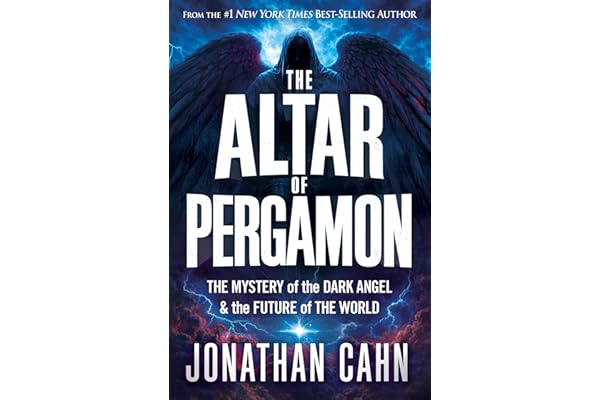
Product details
- ASIN : B0GX35XJDG
- Publisher : Frontline
- Accessibility : Learn more
- Publication date : September 1, 2026
- Language : English
- Print length : 352 pages
- ISBN-13 : 978-1636416168
- Best Sellers Rank: #7,886 in Kindle Store (See Top 100 in Kindle Store)Also click on this link below from Walmart's website. And then click the arrow down under specs/specifications proving that Cahn's book is classified as FICTION.
- Genre & Style: Cahn frequently uses a "narrative" or "story" format (such as in his bestseller The Harbinger) to present what he considers to be divine revelations or "ancient mysteries". Because these narratives involve supernatural themes, ancient entities, and prophetic interpretations of current events, they are sometimes categorized under speculative fiction or Christian fiction by retailers like the "LEFT BEHIND SERIES" by Tim LaHaye and Jerry B. Jenkins.


Author: Jonathan Cahn
Publisher: FrontLine / Charisma Media
Release Date: September 1, 2026
Categories: Fiction / Christian / General • Religion / Biblical Studies / Prophecy • Politics & State
- Platform Monetization: Channels often make money generally from overall video views, ads, and channel memberships rather than a coordinated pay-for-promotion scheme tied specifically to Cahn's books.
- Affiliate Commissions: A subset of You Tube creators may include standard retail affiliate links in their video descriptions, meaning they receive a tiny percentage if a viewer clicks and purchases Cahn's books, but this is a standard marketing practice across YouTube rather than exclusive to Cahn.
- Last but not least, if you post a comment on their channel which doesn't align with or debunks their fallacies, your comment will be deleted because it poses a threat to their financial interest.
- TRUST ME BECAUSE THEY HAVE DONE IT TO ME! DO NOT ALLOW YOURSELF TO BE BAMBOOZLED BY THESE MARKETING STRATEGIES. IN THEIR DELUSIONAL MINDS OF THESE YOU TUBERS, ANY SO CALLED ANCIENT MYSTERY OR BOGUS PROPHECIES IS POSSIBLE IN CAHN'S MYSTICAL WORLD.
- Thematic Focus: Stories generally highlight characters undergoing moral conflicts, crises of faith, or personal transformation, while ultimately discovering strength through their beliefs.
- Clean Content: Readers seeking "clean" stories often turn to this genre because it avoids explicit or graphic material.
- Uplifting Resolutions: The narratives are designed to entertain while providing an optimistic, encouraging takeaway for the reader. [1, 2, 3, 4]
- Religious and Apocalyptic Fiction

- Kat Kerr: Widely identified by conservative theologians and discernment ministries as a false prophet, Kerr is known for controversial claims about regular visits to heaven and a track record of failed prophetic predictions, such as her unfulfilled assertions that Donald Trump would win the 2020 election in a landslide. [1, 2, 3]
- Jonathan Cahn: A bestselling author and speaker frequently promoted on Charisma Media, Cahn is often criticized by theologians for using extrabiblical revelation and eisegesis to link modern-day geopolitical and cultural events directly to ancient biblical prophecies. [1, 2, 3, 4]
- Discussions on Prophecy: While Strang and the individuals he platforms defend their teachings, online communities like Reddit's TrueChristian indicate mixed opinions and heated debates. Some users aggressively challenge the authenticity of these claims, whereas supporters defend the prophets' character. [1, 2, 3, 4]
FACT CHECKING
First let's examine the Biblical text and message that Jesus sent to the church at Pergamum from the book of Revelation
Revelation 2:12-17 continues with the third of seven messages to the churches of Asia Minor (modern-day Turkey) during the apostle John’s time. Each of these messages includes a specific word to a specific church, but there are also lessons applicable to the lives of believers today. This third letter is to the believers in Pergamum (or Pergamos), which was a beautiful and art-filled city in the province of Asia built along two tributaries of the Caicus River. Pergamum was a center for the worship of Dionysus, Zeus, and other pagan gods.
The message to the Pergamene church was from the Lord Jesus Christ, specifically addressed to the “angel” (or “messenger”) of the church: “And to the angel of the church in Pergamum write: ‘These are the words of him who has the sharp, double-edged sword’” (Revelation 2:12). This was not John’s message to the believers at Pergamum; it was a message from Jesus Christ. The depiction of Jesus holding a sharp, two-edged sword refers to the Lord’s readiness to bring judgment (cf. Revelation 1:16).
First, Jesus affirms the church’s positive actions: “I know where you live—where Satan has his throne. Yet you remain true to my name. You did not renounce your faith in me, even in the days of Antipas, my faithful witness, who was put to death in your city—where Satan lives” (Revelation 2:13). The Pergamene believers lived in a difficult place, surrounded by pagan influences, yet they held fast to Christ’s name and did not deny Him during difficult times.
One Christian in Pergamum named Antipas is mentioned as a “faithful witness.” Church tradition says that Antipas was a physician suspected of secretly propagating Christianity. The Aesculapians (members of the medical guild) accused Antipas of disloyalty to Caesar. Upon being condemned to death, Antipas was placed inside a copper bull, which was then heated over a fire until it was red-hot.
The church was not perfect, however, and Jesus took note of their sin: “Nevertheless, I have a few things against you: You have people there who hold to the teaching of Balaam, who taught Balak to entice the Israelites to sin by eating food sacrificed to idols and by committing sexual immorality. Likewise you also have those who hold to the teaching of the Nicolaitans” (Revelation 2:14-15). The “teaching of Balaam” is explained in the context, as Christians were eating food that had been sacrificed to idols (religious compromise) and committing sexual immorality (moral compromise). The original Balaam’s deceitful work is described in Numbers 25:1-3 and Numbers 31:15-16. The Nicolaitans are mentioned only in this letter and in the letter to the Ephesian church (Revelation 2:6). They were likely a group similar to those who held the teachings of Balaam, though the exact nature of their doctrine and practice is unknown.
Jesus then issues a clarion call to repent of their sin: “Repent therefore!” (Revelation 2:16). Our Lord hates religious and moral compromise. He calls His people to live differently.
Jesus notes the judgment that would take place if the church of Pergamum did not repent: “I will soon come to you and will fight against them with the sword of my mouth” (Revelation 2:16b). The Nicolaitans and those who were teaching Balaam’s error would be destroyed, along with their followers, from the congregation at Pergamum. Jesus desires purity among His people, and we have a responsibility to remove false teachers from the church.
Jesus makes a final promise to the believers in Pergamum: “To him who overcomes, I will give some of the hidden manna. I will also give him a white stone with a new name written on it, known only to him who receives it” (Revelation 2:17). The three blessings are hidden manna, a white stone, and a new name. The precise explanation of these three items is disputed; however, all three blessings must concern the believer’s victorious reign with Christ, consistent with the blessings bestowed on the other six churches of Revelation 2–3. The “hidden manna” is likely an allusion to the manna hidden in the Ark of the Covenant, representative of God’s faithful presence and sustenance. The “white stone” could be a reference to the stones used for entrance into temple events in ancient times or to one of the stones on the high priest’s breastplate (Exodus 28:21), although the exact meaning of the stone is uncertain.
DEAR VIEWER, FROM THE ABOVE BIBLICAL PASSAGE, DO YOU SEE ANY BIBLICAL PROPHESY OR SO CALLED ANCIENT MYSTERY WHICH JESUS ALLUDED TO REVEALING THAT THE ALTAR OF PERGAMON/SATAN'S THRONE WOULD HAVE A DIRECT CORRELATION TO THE RISE OF HITLER'S NAZI GERMANY, STALIN'S SOVIET UNION OR INFLUENCE ANY OTHER GLOBAL GEOPOLITICAL EVENTS THAT MR. CAHN IS CLAIMING IN HIS LATEST BOOK?
- The Book of Revelation: In Revelation 2:13, the writer addresses the early Christian community living in the ancient city of Pergamon (or Pergamum), stating, "I know where you live—where Satan has his throne." [1]
- Historical and Symbolic Meaning: Mainstream biblical scholars and historians interpret this phrase as symbolic language. It reflected the intense local pressure placed on Christians in the 1st century AD to participate in Roman imperial cult worship and pagan religious practices (such as the prominent temples dedicated to Zeus, Dionysus, and Asclepius) rather than a prediction of future European events. [1, 2]
- Satan's throne is used metaphorically, meaning "Ephesus". This city was the home of the worship of the goddess Diana, where images of this goddess were made and sold, and where the artisans resisted the teaching of the Gospel of Jesus Christ. Paul and Barnabas were stoned and expelled from this city Acts 14:15. cf pages 320-321 N.T. Light commentary by Dr. George M. Lamsa Aramaic Bible Translator.
- Also Pergamum was a center for pagan worship of many deities, hence it is called the site of the ADVERSARY/SATAN'S THRONE with the result that the sins which were spoken of in Revelation 2:14-15 by Jesus were wide spread cf Jewish N.T. commentary by David H. Stern page 796 versus 12-13a.
- The Pergamon Altar: Many historians and archaeologists associate the biblical phrase "Satan's throne" with the monumental Altar of Zeus or the broader climate of emperor worship in the city. However, the text contains no indication that the physical structure would relocate centuries later or influence future governments. [1, 2, 3, 4]
- The opinion of many scholars is that the altar was dedicated to Zeus and Athena Nike(the goddess of victory) and may have been the object of the reference to Pergamum in Revelation 2:13 as the place where Satan's throne is. The assumption is that this huge and impressive pagan altar may indeed have been that throne of Satan. However, the book of Revelation was evidently written in the context of emperor worship (THE IMPERIAL CULT), and it is more likely that Pergamum's Temple of Augustus, the first provincial temple built to a Roman emperor in Asia Minor, was the throne of Satan referred to in Revelation 2:13. That temple of Augustus has not been identified in the excavation, but some coins minted in Pergamum portray the temple on one side and the head of Caesar Augustus on the other cf Bible Archaeology page 230 by authors Alfred Hoerth and John McRay.
- The Move to Berlin: German archeologists excavated the altar ruins in the late 19th century and reconstructed them in Berlin's Pergamon Museum. [1, 2]
- Speculative Claims: Proponents of modern sensationalist prophecy (such as certain evangelical authors like Jonathan Cahn, Stephen Strang who happens to be Cahn's publisher and other media commentators), argue that the physical transfer of the altar transferred a dark spiritual entity to Germany. They claim it inspired Nazi architecture, Adolf Hitler’s podiums at Nuremberg, or the ideological rise of Soviet communism after the altar was temporarily seized by Soviet troops following World War II. [1, 2, 3, 4]
- Theological Consensus: Mainstream theologians, historians, and exegetes view these modern narratives as imaginative, extracurricular storytelling. They emphasize that reading 20th-century geopolitical entities like Marxism or the Third Reich into 1st-century apocalyptic literature misinterprets the original context and intent of the Book of Revelation. [1, 2]
- Sensationalism and Pseudoscience: Critics and secular observers argue that Cahn forces historical coincidences, dates, and geopolitical movements into an oversimplified theological narrative.
- Exegesis Concerns: Theological critics often point out that tying physical artifacts to modern totalitarianism stretches biblical interpretation (such as the Revelation passage regarding Pergamon) far beyond its original historical context.
- When was the Biblical thesis of the Throne of Satan first FABRICATED?While the biblical verse itself dates back to the late 1st century CE, the scholarly and popular thesis focusing specifically on the physical monument evolved in stages. [1]1. The Ancient Origin: The Textual Basis (c. 95–96 CE)The phrase "where Satan's throne is" was originally coined by John of Patmos in the New Testament Book of Revelation. At the time, the phrase was not tied to an archaeological "thesis" but served as a contemporary spiritual and political critique. Early Christians used it to describe Pergamon because the city was: [1, 2, 3, 4]
- The administrative capital of the Roman province of Asia.
- The epicenter of the aggressive Roman Imperial Cult (emperor worship).
- A hotbed for sprawling pagan temples, including those of Zeus, Athena, and the serpent-god of healing, Asclepius. [1, 2, 4, 5]
2. The Archeological Spark and Thesis Evolution (1870s–1880s)The explicit thesis pinning "Satan's throne" to the Great Altar of Zeus emerged when the physical ruins were recovered.- 1878: German engineer Carl Humann officially began excavating the acropolis of Pergamon. [1, 2]
- The Visual Anchor: As archeologists unearthed the massive monument and shipped it to Berlin, scholars noted its unique architecture. Unlike standard temples, the altar was structured like a colossal, three-sided, elevated seat or chair built into the mountainside, towering over the city. [1, 2, 3]
- The Academic Synthesis: In the late 19th and early 20th centuries, classicists and New Testament theologians (such as Adolf Deissmann and subsequent biblical commentators) formalized the thesis. They posited that John of Patmos used "throne" as a double-entendre: it visually mocked the throne-like shape of the Altar of Zeus, while simultaneously rebuking the supreme Greek deity as the chief of demons (Satan). [1, 2, 3, 4, 5]
3. Modern Expansion of the ThesisIn the 20th and 21st centuries, the thesis evolved from a strictly historical inquiry into a fixture of popular prophetic literature. Authors and theologians frequently map the late-19th-century relocation of the altar to Berlin onto modern geopolitical shifts, ensuring the "Pergamon thesis" remains a highly discussed topic in biblical archaeology and theology. - The primary issue critics and theologians find with Jonathan Cahn’s book The Altar of Pergamon is its reliance on eisegesis—the practice of reading modern geopolitical events and conspiracy frameworks back into ancient biblical texts rather than letting the text speak in its original context. [1, 2]Methodological and Theological Criticisms
- Sensationalized History: Standard historians and theologians argue that connecting the physical movement of the Hellenistic Pergamon Altar to specific 20th-century geopolitical collapses treats complex human history as a Gnostic-style occult thriller rather than a result of socioeconomic and political realities. [1, 2, 3]
- Blurring Fiction and Reality: While formatted partially as a narrative thriller following fictional skeptic characters, Cahn aggressively markets the underlying premise as absolute, unvarnished truth, which critics argue misleads readers into accepting speculative historical patterns as prophetic fact. [1, 2, 3, 4, 5]
- Are there any prophecies in the Bible that predict geopolitical conflicts around the world in the last days?Yes and it has nothing to do with the Altar of Pergamon or any of Cahn's bogus Ancient Mysteries! The Bible contains specific passages that many scholars and believers interpret as predictions of geopolitical conflicts and global instability in the last days. [1, 2]General Wars and Global Tense Situations
- Wars and Rumors of Wars: In Matthew 24:6-7, Jesus warns that the end times will feature "wars and rumors of wars," with "nation rising against nation, and kingdom against kingdom." Many interpret this as ongoing, widespread global military friction. [1]
- Distress of Nations: Luke 21:25 speaks of "distress of nations with perplexity," which commentators often link to complex political standoffs, economic instability, and international crises. [1]
Specific Regional and Global Prophecies- The Gog and Magog Conflict: Ezekiel chapters 38 and 39 outline a major future coalition of nations—including specific ancient geographic regions often associated by interpreters with modern Russia, Iran (Persia), Turkey, and other allies—coming together to attack the land of Israel. [1, 2]
- The Kings of the East: The Book of Revelation (specifically Revelation 16:12 and 9:16) mentions the drying up of the Euphrates River to prepare the way for the "kings from the East," which many modern prophecy teachers connect to massive military mobilizations from Asian superpowers like China. [1]
- A Final Global Empire and Final War: The Book of Daniel and Revelation describe a final worldwide political and economic system ruled by a figure known as the Antichrist, culminating in a gathering of armies at Armageddon (Revelation 16:16) just before a divine intervention. [1]
- WATCH THESE 2 SHORT VIDEOS
- PART IV
- FINAL COMMENTS CONCERNING CAHN'S BOOKS AND BACKGROUND EXAMINED BELOW
- HIGHLY RECOMMEND THIS BOOK
- ON AMAZON.COM
In Debunking Jonathan Cahn: A Comprehensive Critique, we aim to carefully and respectfully examine Cahn’s worldview, taking into account his origins, core beliefs, key figures who have influenced him, and the methodological and epistemological errors embedded in his works. While we acknowledge that Cahn’s teachings have resonated with many, it is essential to apply the tests of coherence and correspondence to his ideas—measuring them against biblical truth and reality.
Cahn’s work is filled with symbolic interpretations, drawing parallels between ancient prophecy and contemporary events. However, his critics argue that he often ventures into speculative territory, sometimes stretching the limits of sound biblical exegesis and leaning into sensationalism. These concerns aren’t trivial, as they touch upon important aspects of Christian faith: how we read and understand Scripture, how we discern truth from fiction, and how we avoid being led astray by false teachings.
In this book, we will critically assess some of the most fundamental issues with Cahn’s approach. First, we will investigate his origins and the formation of his worldview, focusing on the theological framework he uses to make his claims. We’ll highlight the key figures who have influenced his thinking and explore the core beliefs that he espouses. Next, we will address the factual errors, epistemological misunderstandings, and logical fallacies that undermine the credibility of his message.
Throughout this critique, we will not simply point out the problems but also offer Christian solutions. We’ll compare Cahn’s interpretations with traditional Christian doctrines, providing a biblical response to his claims. We hope to equip readers with the tools necessary for discernment—helping them distinguish truth from error, and pointing them back to the authority of Scripture.
In doing so, this book does not seek to attack Jonathan Cahn personally, but rather to address the problematic aspects of his teachings with clarity and compassion. Our goal is to strengthen the faith of those who may have been swayed by his work and to guide them back to a more solid theological foundation. In a time when prophetic voices abound, the need for discernment is critical.The following excerpts are taken from the book "Debunking Jonathan Cahn" by Dr. Samuel James the founder of Advanced Apologetics Research:
Jonathan Cahn was born into a reformed Jewish family, a branch of Judaism that, while honoring tradition, often embraces a more liberal and modern interpretation of Jewish Law and life. His early years were not marked by intense religious fervor or strict observance(page6).
Having experienced a dramatic spiritual conversion, Cahn's path diverged from that of many Christian leaders. He did not pursue formal theological training in traditional seminaries or academic institutions. Instead his education in religious matters became a testament to self study, deep immersion in biblical texts, and mentorship within the Messianic community. This unconventional academic background is a significant milestone, as it profoundly shaped his interpretive methodology. Free from the constraints of established theological paradigms or rigorous exegetical training often emphasized in seminaries, Cahn developed a distinctive approach to scripture. He delved into the Hebrew Bible with an intense focus on identifying patterns, connections, and hidden meanings(a concept he often aligns with the Jewish interpretive method of midrash or the idea of sod, meaning secret or mystery). This unencumbered exploration allowed him to forge unique links between ancient Israel's history and contemporary global events, a practice that would later become a hallmark of his controversial "HARBINGER" concept (pages 7-8).
Jonathan Cahn's narratives often feel like detective stories, inviting the reader to uncover intricate layers of meaning, hidden patterns, and secret codes embedded within biblical texts and historical events(i.e. The Altar of Pergamon). This approach-his heavy reliance on allegorical interpretations and the search for hidden meanings-is a defining characteristic of his work. While the Bible certainly uses symbolism and foreshadowing, Cahn's particular application often moves beyond established interpretative boundaries, becoming highly subjective and lacking clear, verifiable evidence (page 46).
Jonathan Cahn's teachings, while sharing a common foundation with orthodox Christianity, diverge significantly in their specific applications and interpretive methodologies. His unique way of connecting ancient Jewish practices and prophecies to modern American events, his claims of unlocking hidden ANCIENT MYSTERIES, and his intense focus on precise national judgment patterns all represent significant departures from widely accepted theological and hermeneutical norms. Recognizing these divergences is essential for Christians to critically evaluate his work and ensure their understanding of God's word remains grounded in sound doctrine and responsible interpretation (page 86).
Jonathan Cahn does not have formal rabbinical credentials. [1]

- Functional Leader: In this context, the title is used functionally to denote that he is a Jewish-born believer leading a congregation that incorporates Jewish cultural and liturgical elements. [1]
- Self-Designation: Media profiles and biographical notes frequently state that he is simply "known as pastor and rabbi" without referencing specific institutional credentials. [1]


No comments:
Post a Comment