Labels

Showing posts with label AMERICA'S CULTURAL WAR. Show all posts

Monday, May 1, 2023

CULTURE WAR: CHRISTINITY VS WOKENESS


Since its beginnings in the first century, the church has faced varied resistance from the surrounding culture and challenges to the gospel. Recently, a new challenge has emerged: "wokeness," or the state of being "woke." Merriam-Webster identifies "woke" as a slang term meaning being "aware of and actively attentive to important facts and issues (especially issues of racial and social justice)." On the surface, wokeness might sound like seeking justice and showing concern for the weak and oppressed--things the Bible urges us to do (Isa. 1:17, Micah 6:8). However, wokeness often embraces theories and ideologies inconsistent with or even hostile to the Bible. Many well-intentioned Christians--out of a desire to be compassionate, accepting, and loving--are succumbing to cultural pressure to conform to woke ideology, likely unaware of its unbiblical tendencies.

To help Christians think biblically about wokeness, Owen Strachan, FRC's Senior Fellow for Biblical Worldview, has written a new book, Christianity and Wokeness: How the Social Justice Movement is Hijacking the Gospel. In the book, Strachan walks through the history of woke ideology and examines its consequences in American culture and the church. He also consults Scripture to give Christians advice for responding to the woke movement.

Wokeness in the Culture and the Church

The first two chapters of Christianity and Wokeness examine how woke ideology is entering the culture and, more consequentially, the church. According to Strachan, "wokeness" means to be "awake" and in tune with the prevailing zeitgeist. Critical Race Theory (CRT), which sees society as an intentional system of power structures meant to oppress others based on their skin color, is currently the most well-known example of woke ideology. CRT purports that "White Privilege" is at the root of social justice issues and must be eradicated.

The 21st century American church has been both passively and actively incorporating woke ideology into their institutions and practices. Strachan observes that some Christians have started apologizing for and repenting of their "whiteness." Often these actions are prefaced with the proposal that we should change the gospel to fit with woke ideology so that brothers and sisters of color will be more comfortable in the church. While true racial reconciliation is an important outworking of the gospel (Eph. 2), wokeness changes the gospel by teaching that white people are never able to fully repent for their actions because they are inherently racist by nature of being white. But the gospel says all have sinned, and everyone can be fully redeemed through the work of Christ. With its different view of sin and redemption, wokeness undermines the gospel. This is why Strachan argues, "[W]okeness is not a prism by which we discover truths we couldn't see in a Christian worldview. Wokeness is a different system entirely than Christianity. It is, in fact, 'a different gospel.' But it is not just that. In the final evaluation, wokeness is not just not the Gospel. Wokeness is anti-Gospel."

Why is Wokeness an Ungodly System?

In chapters three and four, Strachan outlines his concern with the theological and cultural implications of CRT and woke ideology. First, he encourages believers to guard their hearts and minds, noting the apostle Paul's admonition not to be taken captive by false philosophies (Col. 2:8). Strachan argues that wokeness represents a man-centered gospel that takes others captive through legalism rather than setting them free in the grace of Christ. In other words, wokeness says that only your works can save you--but you can never actually accumulate enough works to satisfy its requirements. Ultimately, this philosophy promises so much, only to abandon its followers in the end.

Furthermore, Strachan provides guidance for responding to unbiblical ideologies. According to Strachan, wokeness calls into question the sovereignty of God and contradicts Scripture by saying that the root of all evil is "whiteness." But, as Strachan explains, "[in] biblical terms, 'white' skin is not our biggest problem. Sin is." He goes on to say, "If you have been convicted and demeaned for your skin color or heritage (whatever each may be), you have been wronged." Woke ideology turns humans against one another, and results in individuals being judged by the color of their skin and status in society rather than the content of their character or their status in the eyes of God.

The Bible and Ethnicity

Because questions of race and ethnicity are so closely tied to woke ideology and CRT, chapter five and six provide an in-depth study of what the Old and New Testament have to say about our identity as human beings. Strachan explains how Genesis teaches that all humans are equally part of one human race. Although we may have different skin tones, languages, or ethnicities that distinguish us, we are all human beings who are made in the image of God (Gen. 1:26-27).

Further, the doctrine of the fall--not CRT--explains the fractured relationships present in humanity. It is not the differences between our skin colors that make us misunderstand, betray, and abuse one another but the sin that infects us all. One tragic consequence of the fall is the sin of racism, which is one way that humans wrongly show partiality. God is not elitist and shows no partiality to anyone, as the apostle Paul frequently discusses in his letters (Rom. 2:11, 10:12; Gal. 2:6, Eph. 6:9). The New Testament also demonstrates how everyone can be united and reconciled in Christ through the gospel message (Eph. 2:14-18, 2 Cor. 5:16-21). God desires that, ultimately, every tribe, tongue, and language be untied in Christ to form the household of God (Eph. 2:19; Rev. 5:9-10, 7:9, 21:3). As Strachan explains, "Distinctiveness is no bad thing and is, in truth, a gift and blessing of God--but unity will be our song in all the ages to come."

The Response to Wokeness

The final chapter of Strachan's book considers the reality of American history, specifically slavery and the civil rights movement. He concludes with recommendations for how Christians can respond to woke ideology in a biblical way, reminding his readers: "We cannot fall silent. We cannot stand by as people around us are taken captive by wokeness or any ungodly ideology."

Although Christians ought to recognize racism's sinfulness and the necessity of repentance for racist thoughts, actions, and attitudes, they should also recognize that certain groups of people are not inherently racist simply because of the color of their skin. Strachan concludes, "Wokeness is advancing far too quickly to treat this matter lightly, or to assume that these issues will simply 'go away.'" He reminds his readers, "No--they will not go away. As we have argued throughout the book, strongholds and false ideologies must be destroyed, not ignored or treated with a softshoe approach."

May we all heed this timely warning and put on the full armor of God (Eph. 6:10-17) to stand firm against all unbiblical ideologies in our day and proclaim the gospel of truth.

Owen Strachan's recent interview about his new book on Washington Watch with Tony Perkinscan be viewed here.


Monday, July 4, 2022

A Brief History of the Culture Wars


Far More Than a Culture War Rages in America


CROSSPOSTED AT THE AMERICAN SPECTATOR


America’s two greatest presidents, Washington and Lincoln, both believed that the ultimate threat to the United States wouldn’t come from abroad in the form of a foreign enemy but rather from within. In his Farewell Address, Washington warned of the dangers of “party passion,” and the “disposition to retaliate… [giving] ambitious, corrupted or deluded citizens… facility to betray, or sacrifice the interests of their own country…sometimes even with popularity…” Lincoln said, “America will never be destroyed from the outside. If we falter and lose our freedoms, it will be because we destroyed ourselves.” On another occasion he said, “…if destruction be our lot we must ourselves be its author and finisher.”

Of all the cultural changes that endanger the well-being and happiness of Americans and impair the governability of the nation, severing the present from the past and the rise of division and intolerance are probably the two greatest threats. In the last 25 years, division and intolerance have increasingly become defining characteristics of American politics and culture — attributes at odds with the vision of the founders and most successive presidents who understood that shared values and unity were the bedrock of American strength.

So all-encompassing has division and intolerance become now, that older generations hardly recognize in contemporary American culture, the place and spiritual home of their childhood. And today, one can rarely take in the arts on stage or in museums, comedy, contemporary Hollywood productions or major league sports without having one’s sensibilities offended or being confronted with politically correct inferences that reflect intolerance and condescension.

Beyond our borders it’s always been a crazy and depraved world. Anti-Semitic prejudice and intolerance has a long history in the Middle East and has been on the rise in Europe and the U.S., taking a turn for the worse on U.S. college campuses in recent years and punctuated this last year with mass murder and attempted mass murder at synagogues in Pittsburgh and Poway, California. In the last 25 years Christian persecution has been increasing in the Middle East, South Asia, and Africa from the upsurge of militant Islam. And just when ISIS appears defeated, the shocking news of mass killings of Christians carried out by Islamist terrorists, who directed their bombings at churches and hotels in Sri Lanka Easter morning reminds us of the harsh reality and magnitude of anti-Christian persecution and intolerance.

In January, Newsweek magazine, which is no friend of Christianity, reported that “Christian persecution and genocide is worse now than in any time in history.” The Pew Research Center recently noted that “in 144 [out of 195] countries in the world, Christians are the most targeted religion.”

To the extent Americans are aware of these facts and that more Christians have died for their faith in the 20th century than at any time in history, some might find consolation that such persecution is primarily taking place outside of the United States. But is that really so and what is to come?

Historians whose research is based on primary sources know that the United States was founded by self-professing Christians. The Founders came from different denominations, but they agreed on fundamental beliefs. And when those fundamentals were applied to the Declaration of Independence and the Constitution, the trajectory of human history was radically changed, for it was Christian Biblical principles that were the basis for man having inalienable rights from God that no government can deny or take away. In the words of President John F. Kennedy many years later: “The rights of man come not from the generosity of the state but from the hand of God.” Similarly it was Christian principles in the Declaration and Constitution that asserted that the legitimacy of government came only from the consent of the people and that human dignity and equality for everyone was the calling of this new revolutionary United States of America.

The supposition that America was founded by Christians based on Christian principles does not mean that every American was or would be Christian. From the beginning, America’s doors were open to people of all faiths — or of no faith — to live in peace and tolerance, knowing they could practice their religion or lack thereof without harassment or discrimination. Christianity not only presupposes respect for people’s free will, but also tolerance, which is the essential guarantor of the rights of others to differ in their personal beliefs and expression.

The earliest groups of settlers coming to America were Protestants — Pilgrims, Puritans, Baptists, Dutch Reformed, Anglicans, and others — and they had various and strong disagreements amongst themselves. By experience, they knew secular government was the only workable option because a theocratic-type alternative would be oppressive and cause perpetual turmoil and civil conflict. Since the founders were Protestants, they were basically optimists and believed that things work together for good because of the dual assumption that the hand of God’s providence is at work in human affairs and that spiritual truth would prevail through man, by love not force, by the example of service and sacrifice for others, and by the exercise of free will in the marketplace of ideas.

The Constitution was drafted in 1787, but its acceptance was stalled for several years because the larger and most influential states feared that the document gave the federal government too much power and they wanted to amend the Constitution to provide for and guarantee specific protections regarding the rights of the people and the states. Finally, with ten amendments, the Constitution was ratified by the last state, Rhode Island, in 1790. Those protections were of course known as the Bill of Rights, with the First Amendment providing the explicit guarantee of religious liberty, which included related rights of freedom of the press, speech, and assembly.

That the United States was a Christian nation was affirmed in 1892 in the U.S. Supreme Court’s ruling in the case of Holy Trinity Church v. The United States, wherein the Court’s findings included a lengthy and detailed accounting of the Christian foundation of both the individual states’ constitutions and the federal U.S. Constitution. The Court summarized its findings, stating: “Our laws and our institutions must necessarily be based upon and embody the teachings of the Redeemer of mankind. [It is] impossible that it should be otherwise and in the sense and to this extent our civilization and our institutions are emphatically Christian.”

Once considered the most towering figure in the Democratic Party, President Franklin Delano Roosevelt said in 1935 that, “We cannot read the history of our rise and development as a nation, without reckoning with the place the Bible has occupied in shaping the advances of the Republic.…[W]here we have been the truest and most consistent in obeying its precepts, we have attained the greatest measure of contentment and prosperity.”

Fast forward a generation from Roosevelt and things began happening that rapidly changed the path of American values and culture. Two Supreme Court case rulings on the interpretation of the First Amendment’s Establishment Clause in the early 1960s removed reference and respect for the Almighty from public schools. Together, Engle v. Vitale (1962) and Murray v. Curlett (1963) ruled it was unconstitutional to have prayer, and readings or recitations from the Bible in the classroom or on the grounds of public schools.

Nine years later in 1971 the Supreme Court took up Roe v. Wade, ruling on January 22, 1973, that under the 14th Amendment, a woman’s right to abortion trumped any other competing rights and could not be abridged by state laws banning abortions. This ruling effectively stripped unalienable rights and equality from both the unborn and the father. In yet another 14th Amendment ruling in Obergefell v. Hodges, handed down on June 26, 2015, in a narrow 5-4 decision, the Supreme Court, legalized same sex marriage nationwide, a decision that transformed the definition of the family, which had been for millennia the foundational institution for pro-creation and child-rearing. In the dissenting words of Chief Justice Roberts, that narrow majority ruling was likely to unleash a new level of intolerance and division because it “not only overlooks our country’s entire history and tradition, but actively repudiates it, preferring to live only in the heady days of the here and now.”

That these Supreme Court rulings incrementally and collectively weakened the authority and influence of Christianity in American society and culture, there can be little doubt. In legislating from the bench and creating whole new rights, these Supreme Court rulings are fundamentally problematic, as they run contrary to the Constitution’s requirements of separation of powers. In both Roe and Obergefell, the Supreme Court usurped and nullified the legislature, whose constitutionally defined role was to originate, debate, and vote on new laws — particularly important when those new laws would fundamentally change family life and society. But also — insofar as law is uncompromising — the Obergefell ruling would escalate the culture war because newly created rights of a minority were certain to clash with and encroach on the rights, sensibilities, and long-standing moral values and institutions held by the majority.

The imprimatur of five Supreme Court justices effectively opened the door to some 2% of Americans being able to dictate to the population at large what they can say, how they can conduct their business, and even influence what churches and synagogues are allowed to practice and preach. From there it’s been a short step in the LGBT agenda to demand ever more equal rights — such as equal access to public bathrooms and locker rooms of either sex, and the right to participate in sports under the transgender’ s new sex rather than the biological birth gender like everyone else. And the way it has been going, those who dare question these trends are likely to be charged with being homo- or transphobic and engaging in hate speech.

Thus, the mooring of a Christian anchor hat helped provide protection and continuity around common sense and shared values — established over millennia — and for some three centuries dating back to colonial times, was cast aside in the course of a few decades. Effectively, a few Supreme Court decisions were instrumental in bending the trajectory of American society’s values and priorities that had been shaped by 2000+ year-old transcendent virtues, aspirations and unalienable God-given rights to a new direction preoccupied with unrestrained self-interest and man-made worldly rights of self-gratification.

To be fair, gradual steps leading to marginalization and discrimination against Christians in America were underway considerably before the aforementioned Supreme Court decisions. The influence of John Dewey, lauded as the greatest educational thinker of the 20thcentury, can be traced back to the 1920s. Dewey was an atheist, who believed and said, “There is no room for fixed and natural law or permanent moral absolutes.” In the decades that followed, various quarters of the public school educational establishment sought to downplay and erase the facts about the role of Christianity in America’s founding and shaping of the nation.

In 1986, Dr. Paul Vitz, a professor of psychology at New York University, published the findings of a commission’s study in which he participated to examine the degree and nature of bias in 60 social studies and history textbooks used by 87% of public schools across the United States. Not only was there no God being thanked by the Pilgrims in the first Thanksgiving, but the study found that almost every other reference to the Christian influence of early America was systematically removed.

In this regard George Orwell’s dystopian future depicted in 1984 has already arrived. Orwell wrote: “Every record has been destroyed or falsified, every book rewritten, every picture has been repainted, every statue and street building has been renamed, and every date has been altered. And the process is continuing day by day and minute by minute. History has stopped. Nothing exists except an endless present in which the Party is always right.”

As Orwell also noted, “the whole aim of Newspeak and Doublethink is to narrow the range of thought.” Political correctness has the same goal and that’s why its adherents are so intolerant — seeking to shut down and silence people with whom they disagree on college campuses across the country, clamoring for removal of historic statues and monuments, and demanding that people with differing views on such subjects as climate change and LGBT rights be silenced, fined or arrested.

Shocking as it might seem, a pattern has been emerging in the U.S. with similarities to the longstanding standard practices in Communist and Fascist totalitarian states — that is: to rewrite history and indoctrinate the youth so as to be able to manipulate and control the future cultural and political landscape.

In that sense the U.S. is closer to a future that is reminiscent of developments that led to persecution in 1930s Germany than anyone would like to contemplate or admit. The Nazi propaganda machine censored non-conforming views and sought to isolate and discriminate against Jews — a strategy intended to engender hatred and prejudice against them within the greater German population, thus setting the stage for the genocidal “final solution” of the Holocaust.

This is not to say that Christians are on the threshold of massive physical persecution in the U.S. But make no mistake, Christianity in America is being marginalized and put on the defensive by growing prejudice and outright hostility. And this trend of intolerance and disenfranchisement of Christians is happening at a time when the digital megaphone of social media is getting increasingly dominant.

Propaganda may actually be more effective in America than in totalitarian societies because of the power of repetitive messaging from ostensibly separate and diverse private media sources within the United States. Citizens in totalitarian societies aren’t as easily fooled because they know that the government controls the media and all its messaging.

In America propaganda narratives originate less from government than from progressive-minded groups of people who tend to think and act “collectively.” Many with this collective mindset are naturally predisposed to joining forces with what Boston University Professor Angelo Codevilla described as America’s Ruling Class, by pursuing careers in the knowledge and information industry — where others of a similar progressive mindset tend to work. Institutions that are largely dominated by the Ruling Class include the mainstream media; social media and information search multinational corporations — notably but not limited to the near monopolies of Facebook, Twitter, Yahoo, Microsoft and Google; the educational establishment and universities; government bureaucracies; large segments of the law practice and the Democratic Party; and many non-profit foundations.

It is noteworthy that the rise of militant secularism and a decline in tolerance and civil discourse has taken place concurrent with the rise and proliferation of social media in America. And for many, visceral hate and name calling have all but replaced civil discourse and debate. America is more divided now than at any time in its history, except perhaps during the period leading up to the Civil war. But because it is hatred and intolerance that fuel this so-called culture war, we have actually opened the floodgates of spiritual warfare, with the forces of darkness and deceit seeking the destruction of the forces of light and truth.

Just so we can’t miss what’s at stake, this epic spiritual battle — that threatens the very foundation of society and the nation — is driven by extreme hate and intolerance, and Christianity, the religion of love and the Savior, is now in the crosshairs.

Who can deny that America’s blessings are unparalleled in human history? The colonists, through their representatives, drafted a revolutionary Constitution that created a system of limited government with checks and balances and separation of power, which also prioritized the protection of the people’s rights and property. It was the first government in human history whose legitimacy came from the people and whose purpose was to serve the people.

As a result the United States rose from colonial poverty to the world’s most creative, prosperous and generous nation in just 200 years. A miraculous accomplishment. And that success happened not by chance, but because the nation’s Christian foundation and Constitution put limits on government and empowered the people to be creative and productive. In the words of the 30thpresident, Calvin Coolidge, “Who can doubt that it has been guided by a Divine Providence?”

Unfortunately, with affluence comes spiritual laziness. Comfortable and disengaged Americans have forgotten the admonitions by Washington, Lincoln, and a number of modern presidents, that it’s necessary to understand and overcome the forces and determined enemies within who seek power by emasculating the values of individual liberty and the institutions that have made America great. Some 20 years before he was elected the 40th U.S. president, Ronald Reagan reminds us that, Freedom is never more than one generation away from extinction.”

What’s needed now is an awakening and spiritual revival within Christianity that acts as a positive force throughout America. That revival would not only inspire believers and reach non-believers, but it would also help the silent majority and less engaged people whose yearnings may be simple, such as the return of civility, satisfaction, and joy that comes from being more authentically connected with people and with the nation’s profound heritage. If Christianity is the source of both love and the principles that are at the heart of the Constitution, it is certainly worth defending. For as Christianity in America goes, so goes everything else.


RECOMMENDED READING


Monday, October 12, 2020

WHAT REALLY HAPPENED AFTER COLUMBUS CAME TO AMERICA


Life Issues – White man’s arrival in America
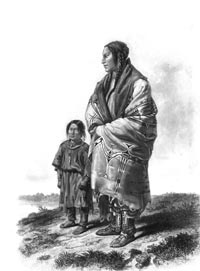
nativeamerican3

American Indians, or rather the Native Americans, had been living on their land long before white men set foot on the soil. When the Europeans came, there were probably 10 million Indians north of present-day Mexico and they had been living there for an estimated 20,000 – 30,000 years, arriving by land and sea during the ice age.
It is believed that the Indians originated in Asia, though few if any of them came from India. The name “Indian” was first applied to them by Christopher Columbus, who thought that the mainland and islands of America were part of the Indies, in Asia.

When the Europeans started to arrive in the 16th- and 17th-century, they were met enthusiastically by Native Americans. The Natives regarded their white-complexioned visitors as something of a marvel, not only for their outlandish dress and beards and winged ships but even more for their wonderful technology – steel knives and swords, cannons, mirrors, earrings, copper and brass kettles, and so on.
Conflicts eventually arose. The Europeans seemed oblivious to the rhythms and spirit of nature. The Indians detected that nature to the Europeans was something of an obstacle, even an enemy. It was also a commodity: A forest was so many board feet of timber, a beaver colony so many pelts, a herd of buffalo so many robes and tongues. Even the Indians themselves were a resource – souls ripe for the Jesuit, Dominican, or Puritan plucking.

It was the Europeans’ cultural arrogance, together with their materialistic view of the land and its animals and plants, which the Indians found repellent.
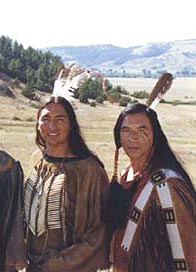
nativeamerican1

The Europeans brought with them not only a desire and will to conquer the new continent for all its material richness, but they also brought with them diseases that hit the Indians hard. Conflicts developed between the Native Americans and the Invaders, the latter arriving in overwhelming numbers, as many “as the stars in heaven”. The Europeans were accustomed to owning land and laid claim to it while they considered the Indians to be nomads with no interest in claiming land ownership. The conflicts led to the Indian Wars, the Indian Removal Act empowered by president Andrew Jackson in 1830 and other acts instituted by the Europeans in order to accomplish their objectives, as they viewed them at the time. In these wars the Indian tribes were at a great disadvantage because of their modest numbers, nomadic life, lack of advanced weapons, and unwillingness to cooperate, even in their own defence.

The Trail of Tears is a typical story of how the white-man settled these new lands with little or no regard for the original inhabitants. It is a tragic tale of force winning over decency and power winning over justice. While the focus today remains on the route travelled and the journey itself, for eight years prior to the event Cherokee were confronted with their future on a daily basis. Illegal stockades called ‘removal forts’ were built on Cherokee land, for the sole purpose of housing Cherokee people before their forced removal from their land on a journey known as “The Trail of Tears.”
There was little the Cherokee could do in their own defence. They tried fighting through the white mans’ court system, with little success. Even when the Court ruled that Georgia could not extend its laws on a sovereign nation such as the Cherokee, removals still continued.

Settlers were greatly divided on the issue of removal. Families that had lived in the Nation before the Georgia Gold Rush tended to be more supportive of the Cherokee. One reason for the strong bond was the acceptance of them by the tribe. White settlers were easily accepted into Cherokee society. The reverse was not true. In general, Georgians viewed the Cherokee as not much higher on the social level than slaves. Another reason that settlers were greatly divided was the support Cherokee had given struggling early settlers in their time of need.
Some settlers would taunt the Cherokee, telling them the forts were to be their new home. With great concern, Principal Chief John Ross and Whitepath, among others, journeyed to Washington to meet with Jackson. Jackson hypocritically told them “You shall remain in your ancient land as long as grass grows and water runs.” In early 1835, work began on road improvements to move the Cherokee to the starting point for their removal.
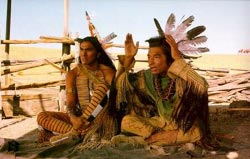
nativeamerican2


The first Cherokee round-up started in May 1838. Some Cherokee reported to the forts, not knowing the fate that awaited them, simply because John Ross had told them this is what they should do. Others stayed and were working in the fields when the soldiers came. The Georgia Guard had identified Cherokee homes. Aided by troops from Alabama, Florida, North and South Carolina, and Tennessee, Georgia militia would typically approach a home and enter the house. The resident(s) would then be forced to leave. The amount of time given residents to collect belongings varied greatly. Some were forced to leave immediately while others had enough time to sell valuables to local settlers at bargain rates. There are numerous instances where settlers attempted to intervene when the Guard was being particularly rough on a family.
Conditions at the forts were horrible. Food intended for the tribe was sold to locals. What little the Cherokee had brought with them was stolen and sold. Living areas were filled with excrement. Birth rates among the Cherokee dropped to near zero during the months of captivity. Cherokee women and children were abused.

For a number of reasons nothing seemed to go right during the removal. The round up that began in mid-May was completed on June 2, 1838. Some Cherokee were forced to live in these conditions for up to five months before the start on the journey whose name is “Nunna daul Tsuny (Trail Where They Cried)” where they were relocated to unproductive wasteland. 4,000 Cherokee deaths are attributed to the removal, with one third considered a direct result of the conditions in the prisons. Unfortunately, many of the Cherokee Removal Forts are unmarked and lost to time.
This is a typical, tragic story of invaders abusing the land and the native people all in the name of expansion, growth and progress.


Genographic Project DNA Results Reveal Details of Puerto Rican History


Let’s go back 520 years ago to the year 1494 on the island of Vieques, off the southeast coast of Puerto Rico’s mainland.
Tainos, the largest indigenous Caribbean population, were living a life based on the cultivation of root crops and fishing when upon the shores arrived Columbus and his fleet, having crossed the Atlantic Ocean for the second time in as many years. At that point in time everything changed.
What’s written on paper has told us much about what happened next. What’s written in the DNA of today’s Puerto Ricans can tell us some more.

(Photo by B. Anthony Stewart/National Geographic Creative)
National Geographic’s Genographic Project researches locations where different groups historically intermixed to create a modern day melting pot. Collaborating with 326 individuals from southeastern Puerto Rico and Vieques, the Genographic Project conducted the first genetic testing in the area with the goal to gain more information about their ancient past and learn how their DNA fits into the human family tree. The results, just published in the American Journal of Physical Anthropology, paint a picture of vast historic complexity dating back some 5,000 years, to the first Caribbean peoples.
Our Genographic team learned some key pieces of information that helped us gain more insight into the peopling of the Caribbean. Most surprisingly, we found that roughly 60% of Puerto Ricans carry maternal lineages of Native American origin. Native American ancestry, higher than nearly any other Caribbean island, originated from groups migrating to Puerto Rico from both South and Central America. Analysis of the Y Chromosome DNA found that no Puerto Rican men (0%) carried indigenous paternal lineages, while more than 80% were West Eurasian (or European).

This leads us to conclude that the Y chromosomes (inherited strictly paternally) of Tainos were completely lost in Puerto Rico, whereas the mitochondrial DNA (inherited strictly maternally) survived long and well. This stark difference has been seen in other former colonies (Brazil, Cuba, Jamaica), but the gender dichotomy appears strongest in the Spanish-speaking Americas. A look into the rest of the Puerto Rican genome using the Genographic Project’s custom genotyping tool, the GenoChip, sheds some light on what may have happened during Spanish colonial times to create this ancestral imbalance.

The average Puerto Rican individual carries 12% Native American, 65% West Eurasian (Mediterranean, Northern European and/or Middle Eastern) and 20% Sub-Saharan African DNA. To help explain these frequencies in light of the maternal and paternal differences, I used basic math and inferred that it would take at least three distinct migrations of hundreds of European men each (and practically no European women) to Puerto Rico, followed by intermixing with indigenous women. It also would necessitate the complete decimation of indigenous men (but not women), to account for those numbers. These results are surprising and also shed light into a dark colonial past that, until now, had remained somewhat unclear.

Migration Map
(Map courtesy The Genographic Project)
These types of analyses, not just across the Caribbean or the world, but across a specific population’s DNA, can have strong historical implications and at the same time help paint a new picture of world history. Learn more about how DNA can inform you about your own personal past, and help us uncover some new secrets of world history by joining The Genographic Project.
 

About National Geographic Society

The National Geographic Society is a global nonprofit organization that uses the power of science, exploration, education and storytelling to illuminate and protect the wonder of the world. Since 1888, National Geographic has pushed the boundaries of exploration, investing in bold people and transformative ideas, providing more than 14,000 grants for work across all seven continents, reaching 3 million students each year through education offerings, and engaging audiences around the globe through signature experiences, stories and content. To learn more, visit www.nationalgeographic.org or follow us on Instagram, Twitter and Facebook.


Meet the Author Miguel Vilar

Dr. Miguel Vilar is the Science Manager for National Geographic's Genographic Project. Miguel is also a molecular anthropologist and a science writer. His fieldwork has taken him to remote places throughout the South Pacific, East Africa, Mesoamerica, and the Caribbean. In the laboratory he researches the modern genetic diversity of human populations from Melanesia, Micronesia, North and Central America, and the Caribbean. Miguel has published in several anthropology and genetics journals, as well as popular science magazines.


Wednesday, June 24, 2020

The Zionist Communist Takeover Of America – 45 Declared Goals


The Communist Takeover Of
America – 45 Declared Goals


Rense.com – by Jeff Rense


On January 10, 1963, the House of Representatives and later the Senate began reviewing a document entitled ‘Communist Goals for Taking Over America.’  It contained an agenda of 45 separate issues (attacks and techniques) that, in hindsight, were quite shocking then and equally stunning today.    
Over the last 50 plus years since this list was introduced in the House, many things have changed, among them that the Soviet Union is gone and Communism isn’t mentioned by the controlled MSM anymore.  Why? Because the founders of Communism, World Zionism, is now the dominant force in the Western World and controls virtually every major geopolitical, social, cultural and commercial aspect of our existence.
Most importantly, about 27 of the 45 Communist (Zionist) Goals on the original list have been or are being achieved.  (History has largely retired the other 18).   These remaining 27 items will…or should…shock you.  It is essential to also understand that world Zionism CREATED Communism, took down Russia, set up the Soviet Union and created two World Wars in which over 100 million died.  Whether the term is ‘Communism’ or ‘Bolshevism’ or ‘Socialism’  or ‘Marxism’ they all emanate from one source – World Zionism.  That must never be forgotten.
So, as you read through this list, understand and never forget that these goals, most now 100% implemented, are all ZIONIST goals.
Here, in part, are the most blatant Zionist Communist achievements listed in that original list of 45 Goals.   Read this group very carefully…these are the most sweeping, revolutionary, devastating and deadly Goals on the list from 1963.  ( I will list all original 45 further down the page.)
Here we go…
4. Permit free trade between all nations regardless of Communist affiliation and regardless of whether or not items could be used for war.
11. Promote the UN as the only hope for mankind.
13. Do away with all loyalty oaths.
15. Capture one or both of the political parties in the United States.
16. Use technical decisions of the courts to weaken basic American institutions by claiming their activities violate civil rights.
17. Get control of the schools. Use them as transmission belts for socialism and current Communist propaganda. Soften the curriculum. Get control of teachers’ associations. Put the party line in textbooks.
18. Gain control of all student newspapers.
19. Use student riots to foment public protests against programs or organizations which are under Communist attack.
20. Infiltrate the press. Get control of book-review assignments, editorial writing, policy-making positions.
21. Gain control of key positions in radio, TV, and motion pictures.
22. Continue discrediting American culture by degrading all forms of artistic expression. An American Communist cell was told to “eliminate all good sculpture from parks and buildings, substitute shapeless, awkward and meaningless forms.”
23. Control art critics and directors of art museums. “Our plan is to promote ugliness, repulsive, meaningless art.”
24. Eliminate all laws governing obscenity by calling them “censorship” and a violation of free speech and free press.
25. Break down cultural standards of morality by promoting pornography and obscenity in books, magazines, motion pictures, radio, and TV.
26. Present homosexuality, degeneracy and promiscuity as “normal, natural, healthy.”
27. Discredit the Bible and emphasize the need for intellectual maturity, which does not need a “religious crutch.”
28. Eliminate prayer or any phase of religious expression in the schools on the ground that it violates the principle of “separation of church and state.”
29. Discredit the American Constitution by calling it inadequate, old-fashioned, out of step with modern needs, a hindrance to cooperation between nations on a worldwide basis.
30. Discredit the American Founding Fathers. Present them as selfish aristocrats who had no concern for the “common man.”
31. Belittle all forms of American culture and discourage the teaching of American history on the ground that it was only a minor part of the “big picture.” Give more emphasis to Russian history since the Communists took over.
32. Support any socialist movement to give centralized control over any part of the culture–education, social agencies, welfare programs, mental health clinics, etc.
37. Infiltrate and gain control of big business.
38. Transfer some of the powers of arrest from the police to social agencies. Treat all behavioral problems as psychiatric disorders which no one but psychiatrists can understand [or treat].
39. Dominate the psychiatric profession and use mental health laws as a means of gaining coercive control over those who oppose Communist goals.
40. Discredit the family as an institution. Encourage promiscuity and easy divorce.
41. Emphasize the need to raise children away from the negative influence of parents. Attribute prejudices, mental blocks and retarding of children to suppressive influence of parents.
42. Create the impression that violence and insurrection are legitimate aspects of the American tradition; that students and special-interest groups should rise up and use [“]united force[“] to solve economic, political or social problems.
THESE are the key Communist Goals on the list and demonstrate clearly how America has been subverted and torn apart from the inside out.  You can see the entire, original list of 45 down below…a list that was entered into the Congressional Record in 1963.    – Jeff Rense
Comment From Founders’ America
foundersamerica@hotmail.com 
12-7-2 Jeff…adding a couple of my own numbers…
46. Import anti-white racists from the Third World, via an open-borders policy, then force their integration to divide and conquer white Western civilization in North America.
47. Feminize men and disarm both the citizenry and military; especially disarm white males.
Rense.com